



Best Booster Car Seats of 2026 in Canada

Watching your child grow up is a mix of excitement and disbelief. One minute you are carefully clicking an infant carrier into a base, and the next, your "big kid" is asking to sit like a grown-up. But just because they have outgrown their convertible seat doesn't mean they are ready for the vehicle seat belt alone.
In most Canadian provinces, booster seats are required by law for children who have outgrown their forward-facing car seat, and they are a critical safety step. Seat belts are designed for adult bodies, not children. A booster seat does exactly what its name suggests, it boosts your child up so the seat belt fits correctly over their strong hip and shoulder bones, rather than their soft tummy or neck.
Navigating the world of booster car seats can be overwhelming, especially with safety standards constantly evolving. At Macklems, we have helped thousands of Canadian families find the perfect fit for their vehicles and their children. In this guide, we will walk you through everything you need to know about choosing the right booster and share our top picks for the year.
What Is a Booster Seat and Why Your Child Needs One
A booster seat is the final stage of your child's car seat journey before they graduate to using just the vehicle seat belt. Unlike the car seats you used previously, most dedicated booster seats do not have a five-point harness (though some combination seats do). Instead, they rely on the vehicle's seat belt to restrain the child.
The primary job of a booster is belt positioning. Without a booster, a seat belt often rides up on a child's belly or cuts across their neck. In a collision, this poor fit can cause severe internal injuries known as "seat belt syndrome." A good booster seat raises the child up and guides the lap belt low across the upper thighs and the shoulder belt across the center of the chest.
Using a booster isn't just about following the law; it is about protecting your child's developing skeleton. It ensures that crash forces are distributed to the strongest parts of their body.
When Is My Child Ready for a Booster Seat?
This is the most common question we hear. Many parents are eager to move to the next stage, but rushing into a booster seat too early can be dangerous.
In Canada, children generally need to be at least 40 lbs (18 kg) to use a booster seat, but weight isn't the only factor. Maturity matters just as much. Because booster seats use the vehicle seat belt, your child must be able to sit properly for the entire ride—no slouching, no leaning over to pick up toys, and no moving the shoulder belt behind their back.
Most children are not developmentally ready for this responsibility until they are at least 5 or 6 years old. If your child still wiggles a lot or sleeps often in the car, they may be safer staying in a 5-point harness longer. For more detailed advice on timing this transition, check out our complete baby car seat buying guide.
What the law says in Ontario: Children who have outgrown their forward-facing car seat and weigh 18 to 36 kg (40 to 80 lbs) must ride in a booster seat until they turn 8, weigh 36 kg (80 lbs), or reach 145 cm (4 ft 9 in), whichever comes first. Rules differ slightly between provinces, so check your provincial transportation ministry if you live outside Ontario.
High Back vs Backless Booster Seats
When shopping for booster seats, you will encounter two main types: high back and backless.
High Back Boosters: These look like a regular car seat but without the harness. They provide head and neck support, which is essential if your vehicle's seat back is low or doesn't have a headrest. They also offer side-impact protection wings, which help keep a sleeping child upright and properly positioned.
Backless Boosters: These are simply the base portion that sits on the vehicle seat. They are lightweight, portable, and often cheaper. However, they require your vehicle to have headrests tall enough to support your child's head up to the tops of their ears.
For younger children just transitioning into boosters, we almost always recommend a high-back booster. The added structure helps remind them to sit still and provides better protection in side-impact crashes. For older kids and carpools, a backless booster such as the Clek Olli or Britax UpNGo Click is easy to move between cars.
5 Best Booster Seats of 2026 in Canada
We have curated a list of the safest, most comfortable, and easiest-to-use boosters available at Macklem's this year. Here are the top choices Canadian parents love.
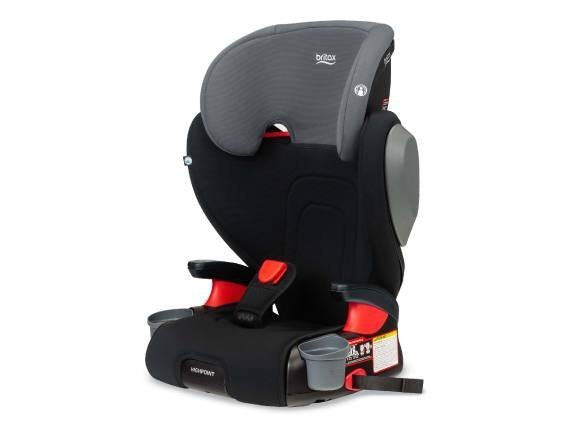
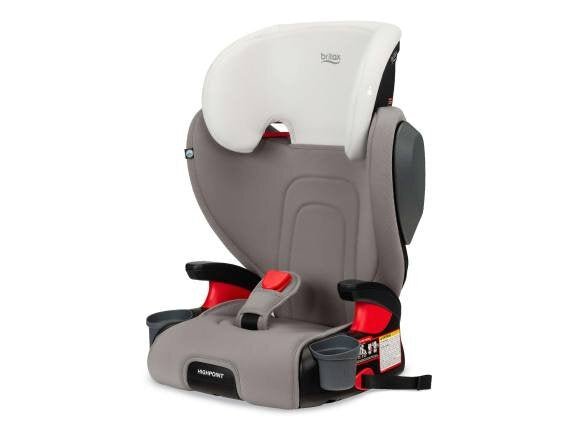
Britax Highpoint
Short Intro: Known for safety, the Britax Highpoint offers extensive side impact protection.
Best For: Taller children who need room to grow.
Price at Macklem's: $229.99

Key Features:
- 3 layers of side impact protection.
- Colour-coded belt guides make buckling easy for kids.
-
Soft, breathable fabric for long rides.
Why Canadian Parents Love It: The high weight and height limits mean this seat lasts a long time, making it a great investment.
UPPAbaby Alta V2
Short Intro: The UPPAbaby Alta V2 is a premium high-back booster built for kids from roughly 6 to 10 years old.
Best For: Parents who want premium comfort and easy one-hand adjustments.
Price at Macklem's: $289.99

Key Features:
- Fits children 40 to 100 lbs and 38 to 57 inches tall.
- SecureFit belt routing and side impact protection pods.
-
Seven-position headrest and one-hand multi-position recline.
Why Canadian Parents Love It: The dual armrests, dishwasher-safe cup holder and GREENGUARD-certified fabrics make it a comfortable seat kids actually like sitting in.
Maxi-Cosi RodiSport
Short Intro: The Maxi-Cosi RodiSport is a 2-in-1 booster that converts from high-back to backless.
Best For: Families who need a slim seat for three-across or carpool days.
Price at Macklem's: $299.99

Key Features:
- Fits children 40 to 100 lbs and 43 to 57 inches tall.
- Rigid LATCH keeps the seat secured even when empty.
-
One-hand headrest adjustment with 7 height positions.
Why Canadian Parents Love It: Its slim design fits three-across in most vehicles, and the recycled EcoCare fabrics are machine washable and dryer safe.
Britax Skyline
Short Intro: The Britax Skyline is a 2-stage booster with a removable high back that grows with your child.
Best For: Parents who want long-lasting value at a mid-range price.
Price at Macklem's: $199.99

Key Features:
- High-back mode for 40 to 120 lbs and 44 to 63 inches; backless mode for 48 to 120 lbs.
- Two layers of side impact protection and an energy-absorbing shell.
-
Ten-position headrest with no rethreading.
Why Canadian Parents Love It: The 120 lb limit and 10-year expiry mean one seat can last right through the booster years, and the two dishwasher-safe cup holders keep snacks under control.
Clek Olli
Short Intro: The Clek Olli is a backless booster with rigid LATCH connectors, designed for kids who have outgrown "babyish" gear.
Best For: Older kids, travel and moving between cars.
Price at Macklem's: $139.99

Key Features:
- Rigid LATCH (UAS) connectors lock in with an audible click.
- Raises your child 10 cm (4 in) for better shoulder belt fit.
-
Comfort Cube padding and flame retardant-free, PFAS-free fabrics.
Why Canadian Parents Love It: It is light, portable and stays latched in place when empty, which makes it a favourite for carpools and grandparents' cars.
How Booster Seats Fit Into Your Car Seat Journey
Understanding car seat stages and the rules around them can be confusing. The booster seat is typically the third major stage. You start with infant car seats, move to convertible car seats (often rear-facing then forward-facing), and finally arrive at the booster stage.
Some parents opt for all in one car seats which cover every stage from birth to booster. However, many families find that dedicated booster seats are lighter, less bulky, and easier for older children to buckle themselves into compared to the booster mode of a massive all-in-one seat.
Eventually, your child will graduate from the booster to just the vehicle seat belt. In Ontario that is legally allowed at age 8, 36 kg (80 lbs) or 145 cm (4 ft 9 in), but many children don't fit an adult belt properly until they are 10 to 12 years old. Before moving on, use the "5-Step Test":
- Their back is flat against the vehicle seat back.
- Their knees bend comfortably at the edge of the seat.
- The lap belt sits low across the upper thighs, not the stomach.
- The shoulder belt crosses the middle of the chest and shoulder, not the neck.
- They can stay seated like this for the whole trip.
If the answer to any of these is no, keep using the booster.
To see our full range of options across all stages, browse our main collection of car seats.
Booster Seat Safety Tips
Safety doesn't stop at buying the right seat; it is also about how you use it. One critical rule is to always ensure the lap belt is touching the thighs, not the stomach.
Remember, a booster seat is only safe if the child stays in position. If you are going on a long road trip and your child tends to slump when sleeping, a high-back booster is much safer than a backless one.
Also, be mindful of projectiles. An unoccupied booster seat can become a dangerous projectile in a crash if it isn't buckled in or latched down. Always buckle the booster in when your child isn't with you, or choose a model with rigid LATCH connectors (UAS) to keep it secured to the vehicle.
For a deeper dive into best practices, read our blog on car seat safety tips for Canadian parents.
Installing a Booster Seat Correctly

The beauty of most booster seats is that they are generally easier to "install" than convertible seats because the seat belt holds both the child and the seat.
- Place the booster flat on the vehicle seat.
- Use the UAS/LATCH connectors if your booster has them. This keeps the seat from flying around when empty.
- Thread the seat belt through the indicated colour-coded guides (usually red or green).
- Check the fit. The shoulder belt should cross the chest and collarbone, and the lap belt should be low on the hips.
- Listen for the click. Ensure your child buckles the seat belt securely every time.
Accessories That Make Booster Seats Better

As your children get older, their mess doesn't necessarily get smaller, it just changes! To protect your vehicle's upholstery from scuffs and spills under the booster, consider a seat protector.
Additionally, older kids in boosters might have snacks, water bottles, or tablets. Some boosters come with cup holders, but if not, you can explore add-ons. Keeping the car organized helps safety too, as it prevents loose objects from becoming hazards during a sudden stop.
Check out our selection of car seat accessories to keep your car clean and comfortable.
Travelling With Booster Seats
One of the big advantages of booster seats is portability. If you are flying, you can often gate-check a booster or even bring a high-back booster on board (check airline rules, as belt-positioning boosters cannot be used during flight, but harnessed combination seats can).
If you are using a travel system or moving seats between cars, you might occasionally need specific hardware. While less common for boosters, some setups require specific parts. You can find what you need in our car seat adapters and car seat bases sections if you are managing multiple seats for siblings of different ages.
Common Booster Seat Mistakes to Avoid
Even with the best gear, mistakes happen. Here are a few to watch out for:
- Moving too soon: Don't rush out of the 5-point harness. If your child fits their forward-facing harnessed seat, keep them there.
- Shoulder belt behind the back: This is dangerous. If the belt rubs their neck, adjust the booster height; never let them tuck the belt behind them.
- Twisted straps: Always ensure the vehicle seat belt lies flat against the child.
- Heavy coats: Just like with infant seats, puffy winter coats can compromise safety. It is better to dress them in layers or put the coat on backwards over the buckled belt.
Final Buying Checklist for Parents
Before you make your final choice, run through this quick checklist:
- Does your child meet the weight/height minimums? (Usually 40lbs/18kg minimum).
- Is your child mature enough to sit still?
- Does the booster fit your vehicle? (Check width for 3-across situations).
- Does it have the features you need? (Cup holders, washability, side impact protection).
- Is it comfortable? Your child will be sitting in it for years.
If you are still deciding between a booster and another type of seat, you might want to review our list of the best convertible car seats in Canada to ensure you aren't skipping a step.
Conclusion
Transitioning to a booster seat is a milestone that signals your child is growing up. It brings convenience and independence, but safety remains the priority. Whether you choose the long-lasting Britax Highpoint, the premium UPPAbaby Alta V2, or the portable Clek Olli, the most important thing is a proper fit for your child and your car.
At Macklems, we are committed to offering only the highest quality, safety-tested products for Canadian families. We invite you to explore our full selection of booster car seats to find the perfect match for your big kid's next adventure. Drive safe!